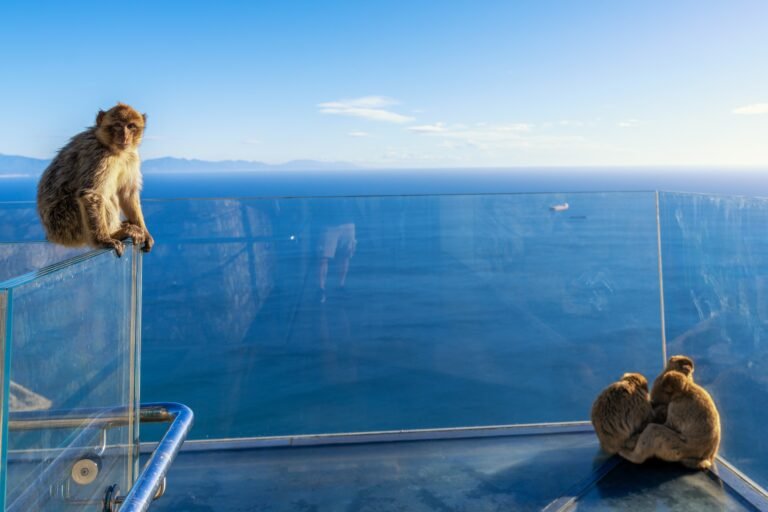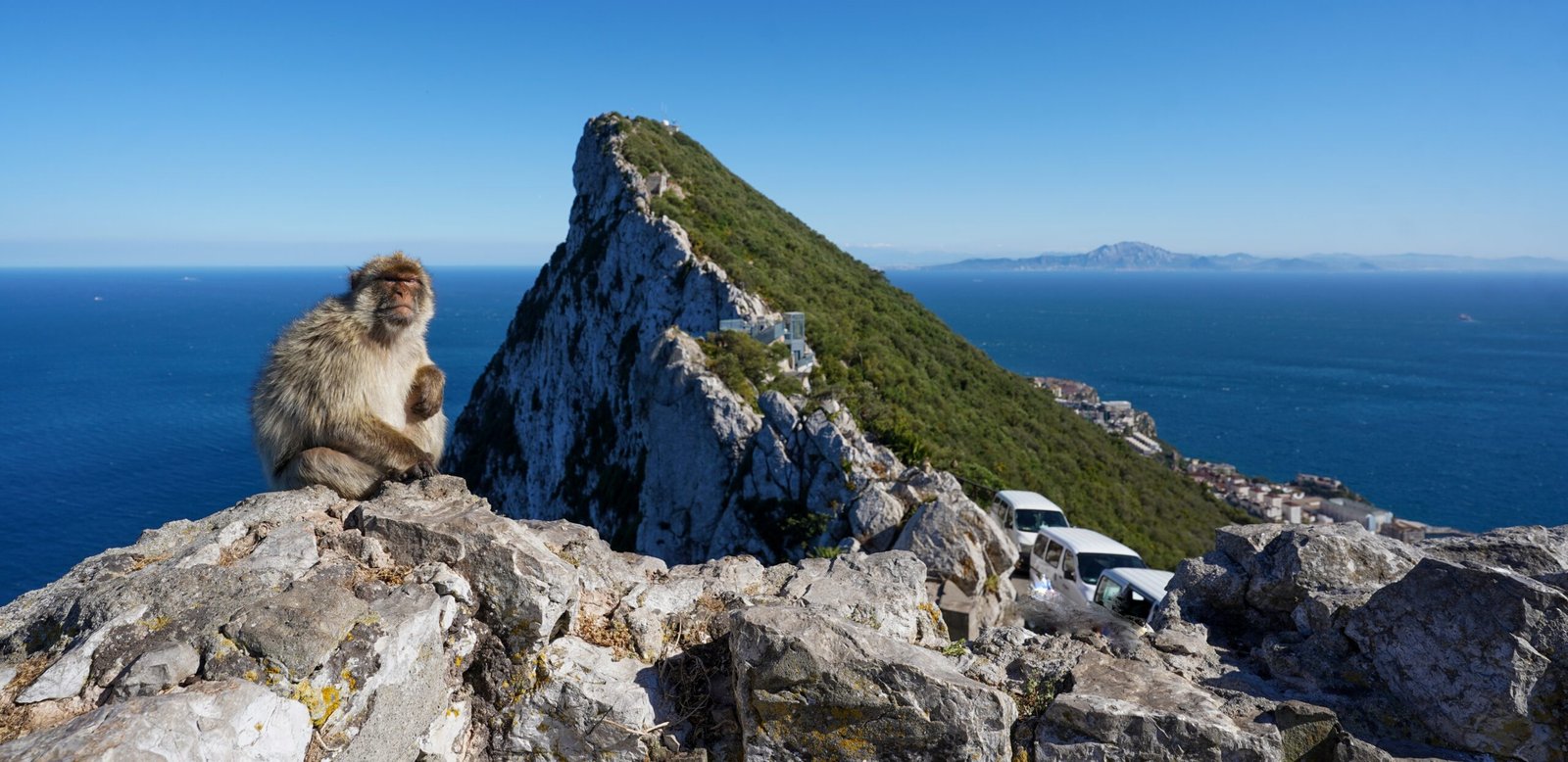
Watch Gibraltar’s famous Barbary macaques in their Upper Rock home, with a local guide to help you understand the animals and respect their space.
The Gibraltar monkeys are among the Rock’s best-known sights. They are Barbary macaques: free-ranging wild animals that live in several groups across the Upper Rock. A wildlife stop adds something different to a sightseeing day, whether you are visiting for the first time, travelling with family or looking for natural photographs.
Where can you see Gibraltar’s monkeys?
Apes’ Den is a well-known place to observe macaques, but they are not confined to a single enclosure. Their movements vary, so a sighting is an encounter with wildlife rather than a scheduled animal show. Follow your guide’s directions and let the animals choose their own space.
The most rewarding moments often come from watching ordinary behaviour: animals resting together, grooming or moving through their habitat. Leave time to observe rather than focusing only on a close photograph. A zoom lens or your phone’s camera framing can help you take pictures without moving towards an animal.
Locally the macaques are often called Rock apes, although they are monkeys. They also feature in Gibraltar’s folklore, including the story linking their presence with British rule. Your guide can distinguish local legends from the practical realities of living alongside a wild population.
How to visit the macaques responsibly
Keep distance and do not feed or touch
These animals are accustomed to people but are not tame. Do not approach them as pets, touch them, offer food or encourage them to climb onto anyone for a photograph. Feeding is prohibited and can harm the animals’ diet and behaviour. Keep children close and make sure everyone in the group understands the same rules.
Keep food out of sight and belongings secure. Stay calm if a macaque moves nearby, avoid sudden movements and allow it room to pass. Do not crowd a group or separate an adult from its young. Follow the official macaque viewing guidance and your guide’s advice throughout the stop.
Tickets and getting around
The daytime Classic and Extended tours list Nature Reserve entrance tickets as included. The Panoramic Tour is an evening scenic route when the main attractions are closed. Check your chosen itinerary and access arrangements rather than assuming that all three tours offer the same indoor visits.
Travelling by private vehicle between stops reduces the need to plan a steep walk up the Rock. Tell Ryan about mobility needs and vehicle transfers before booking. Because the macaques move freely, the most suitable viewing stop may depend on conditions and where the animals are on the day.
What to bring
Wear comfortable footwear, bring water and a light layer, and keep bags closed while observing the animals. Take photographs from a respectful distance. If wildlife is your main interest, say so when enquiring: this lets you discuss the pace of the tour and time at the relevant stops.
Which Gibraltar tours include the macaques?
All three published itineraries list Gibraltar macaques. Choose the Panoramic Tour for a shorter evening scenic experience, the Classic Tour for the main Upper Rock attractions, or the Extended Tour for additional coastal and historical stops.
Wildlife behaviour and the exact viewing location cannot be guaranteed. Share your interests, available time and any concerns about being near animals when enquiring about your tour, so a comfortable and respectful visit can be discussed.
Gibraltar Macaques: frequently asked questions
Are the Gibraltar monkeys wild?
Yes. The Barbary macaques roam freely in groups across the Upper Rock; they are not tame pets.
Where is Apes’ Den?
It is a well-known macaque viewing location in the Upper Rock Nature Reserve. The animals also range elsewhere on the Rock.
Can I feed or touch a macaque?
No. Do not feed, touch or entice the macaques. Keep a respectful distance and follow official guidance and your guide’s advice.
Which tours include the Gibraltar macaques?
They are listed in the Panoramic, Classic and Extended itineraries. The exact encounter depends on wildlife movements and conditions.
Can children visit?
Discuss your family’s needs when booking and supervise children closely. Everyone should keep distance and avoid feeding or touching the animals.
Visitor reference: official attraction information. Check current access and operating arrangements before travelling.